
How can we offer elderly people with dementia a museum experience so that they can enjoy art and culture in a safe and meaningful way?
From the Dordrecht Museum, a museum that focuses on art from the area around Dordrecht, we received the assignment to make the public guidance in the permanent collection display of the Dordrecht Museum sufficient for a specific target group.
Date: 1-9-2024 t/m 21-1-2025
Client: het Dordrechts Museum
Grade: 8

Target group
Elderly people between the ages of 65 and 75 who are in the early stages of Alzheimer’s.
We were given the opportunity to select a target group ourselves. In doing so, I wanted to challenge myself by choosing a group outside my comfort zone.
In the Netherlands, there are an estimated half a million people living with dementia. For elderly people with dementia and their carers, it can be difficult to engage in activities, which often leads to feelings of loneliness. That is why our team chose this target group.
At the moment, the museum offers a “Verwonder Tour” in which older visitors discuss paintings around a specific theme. However, this program has not been very successful, as it is often difficult to find a topic and conversation style that keeps the group of older participants engaged.
Design proces

Research
As a team, we conducted both desk research and field research using the PACT analysis (People, Activities, Context, Technology). I focused on the “Activities” aspect of the analysis. For this, I carried out desk research and conducted a Contextual Inquiry during a flower-arranging session at the activities center in a nursing home. I accompanied the supervisor, assisted, and spoke with various elderly individuals.
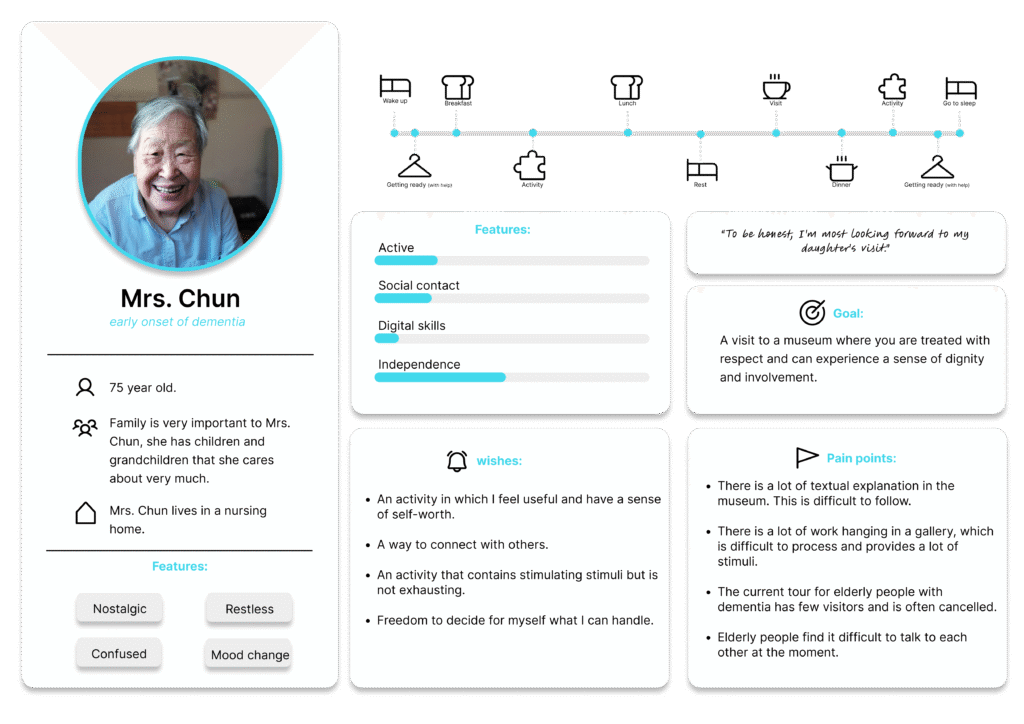
Based on these insights, along with those from the rest of my team, I created a user persona.
Ideation
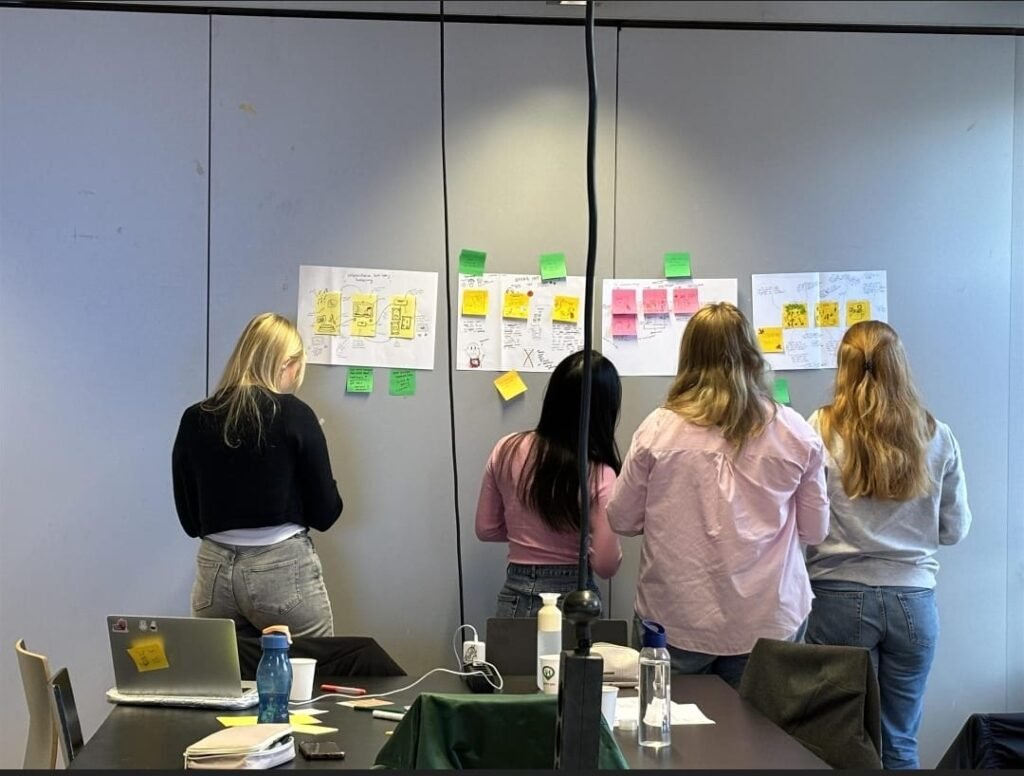
After setting up the long-term goal, our team completed various assignments to generate ideas. For example, we created a map, conducted lighting demos, held 20-minute brainstorming sessions, used the Crazy 8 method, and produced solution sketches. I took the lead as the decision-maker and guided my team through these activities.
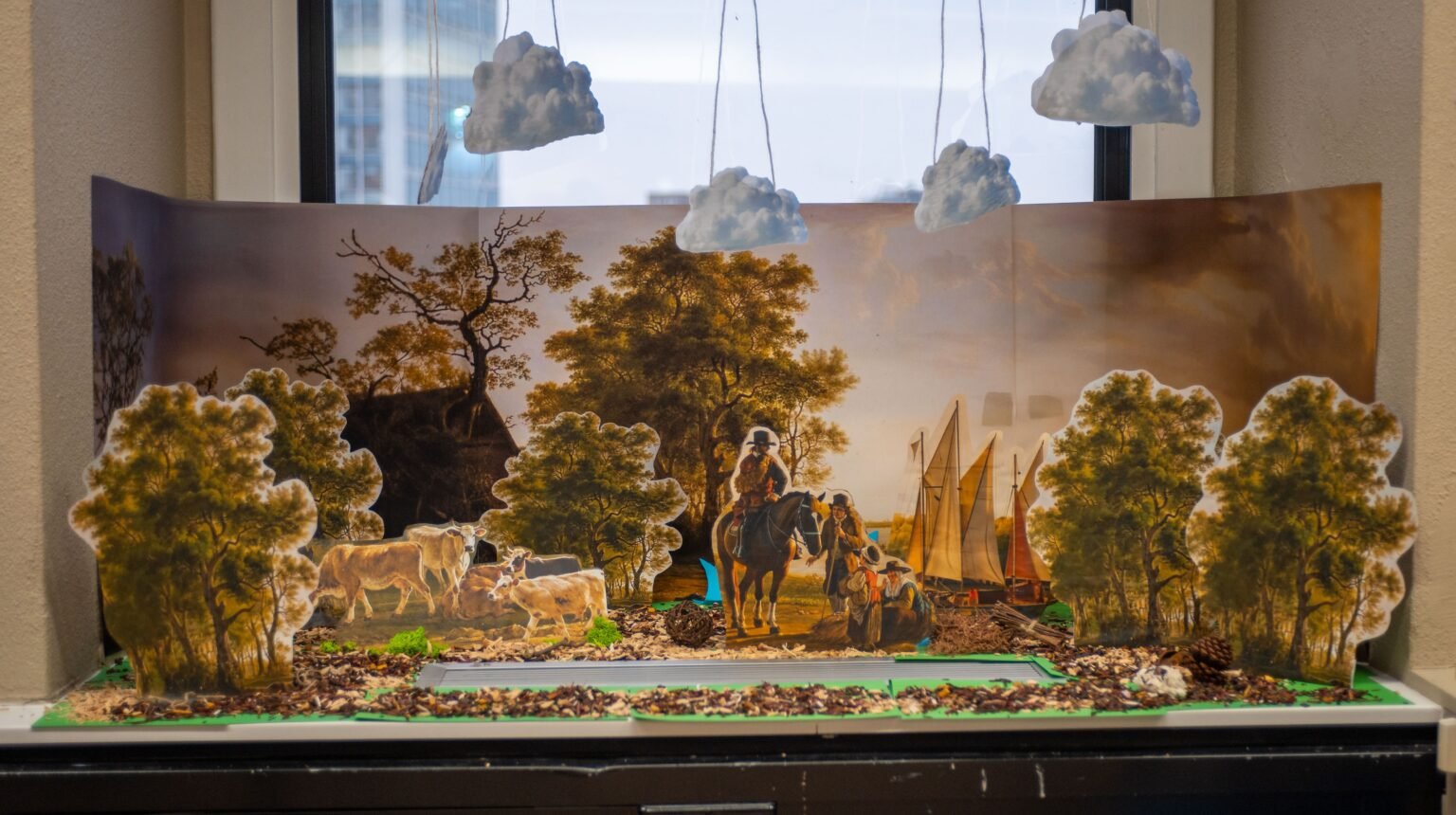
After the ideation phase, we came up with the concept of bringing paintings to life. For our prototype, I developed AI animated fragments of the painting, which I then edited in Adobe After Effects. Together with the work of my teammates, this resulted in ta video. We used the video to test our concept with the target group and stakeholders.
Testing with the target group
During this project, I had the opportunity to test our prototypes several times. For example, I visited a care farm and a nursing home to connect with elderly residents and their caregivers. I took the time to get to know the people, drinking coffee with them and participating in various activities.
During the testing sessions, I briefly explained my purpose and what we were going to do. Then, I showed the video. Afterward, I engaged the residents in conversation about what they had seen. It was important to me to make them feel comfortable and give them space to share their thoughts and stories.
Through these tests, I discovered that highlighting certain elements helped the elderly focus more easily. The parts they felt a personal connection with stood out to them, creating a more meaningful experience. For instance, I spoke with a woman who used to visit the harbor with her father, and one man told me he had seen Queen perform just the day before.
One area for improvement is the pacing. The animations could be shown for a bit longer, and a pause between paintings would allow space for conversation.
Our solution
Art comes to life with VerwonderAR
Take a specially designed tour for people with dementia at the Dordrechts Museum. Put on the glasses, and you’re no longer just standing in front
of a painting , you’re part of it!

Reflection
During this period, I learned how to work with a challenging target group. For example, I often couldn’t directly ask the elderly how they felt about certain things, so I learned to pay more attention to their behavior. Personally, I really enjoyed the challenge of getting to know these people and being able to mean something to them. I discovered that, for many of them, simply having a conversation and sharing a cup of coffee was already enough.
It is also difficult for people with dementia to take in too much information at once. That is why I believe this approach of highlighting just one small element works so well. One thing I would like to change is removing the guided tour from the museum. While talking to visitors and caregivers, I realized that they neither had the resources or the interest to visit the museum.
During this period, I also worked with AI for motion effects. This turned out to be more difficult than I had expected, mainly because only one element was supposed to move while the rest needed to remain still. Through research and consultation with experts, I eventually managed to make it work.
CMD year 2
De Zorgmaatjes
How can we offer elderly people with dementia a museum experience so that they can enjoy art and culture in a safe and meaningful way?
Erasmus MC – Create 4 care
CMD year 1
The Mirror Of Affirmation
“How can we support and inspire queer young adults to feel confident when choosing a haircut that reflects their personal identity?”
SOBKOLT