
How can we improve the user experience of the columnpage by making it easier for readers to discover and find their favorite columnists.
During my internship at DPG Media, I worked on redesigning the column page for de Volkskrant. The goal of this project was to analyze user feedback on the existing page and translate these insights into a redesigned experience that better aligned with the needs and expectations of the users.
Date: 16-2-2026 t/m 26-3-2026
Intership: DPG Media

Current Situation
Before my internship started, feedback had already been collected regarding the section pages of de Volkskrant. A large part of this feedback focused on the column page. Users indicated that they would like a clearer overview of the different pages and an easier way to keep track of articles written by their favorite columnists.
research
Before starting this project,I first took time to dive into the topic and better understand the users. Through several short interviews, I was able to gain a better understanding of the users and their needs. I also analyzed existing research to identify recurring insights and better map out user expectations and behaviors. Through this process, I learned that users often lose interest when presented with long lists of content and generally expect more structure and overview within a page.
Besides talking to users, I also spoke with the editorial teams who manage these pages and select the articles that appear on them. This helped me gain insight into their workflow, needs, and the challenges they experience when working with the current page structure. They wanted a page where articles could be updated automatically, allowing them to focus more on other tasks and responsibilities.
After conducting research, I defined several next steps for the redesign. One of these was introducing clearer hierarchy within the page. By organizing the articles into distinct categories and making this structure more visible, users can more easily understand what content is available on the page. At the same time, this allows the editorial team to automatically place articles into the correct categories, making the page easier to manage.
prototyping
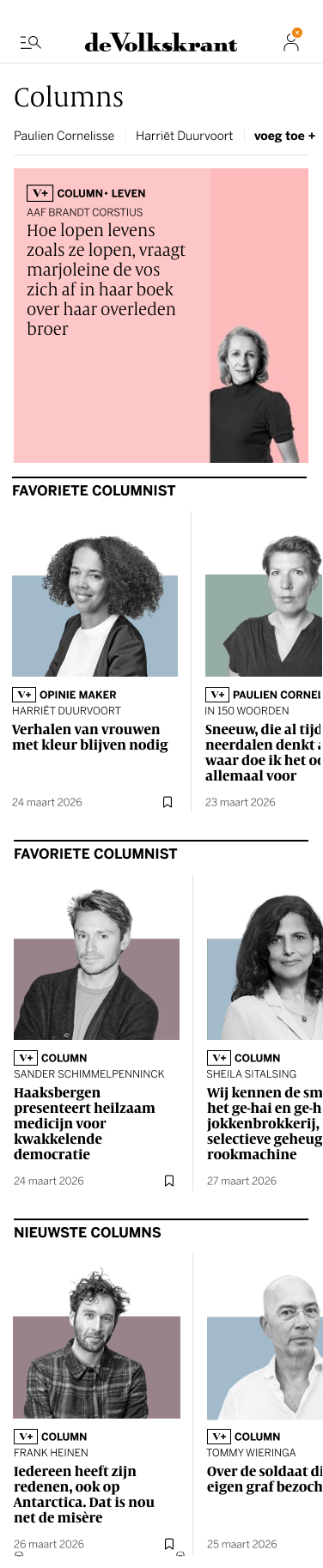
After conducting research and translating the findings into next steps, I turned these insights into a prototype. The main focus of the redesign was making it easier for users to find and follow their favorite columnists.
To support this, I introduced a feature that allows users to follow a columnist and stay updated whenever new columns are published in the “favoriete columnisten” swimlane at the top of the app.
I also aimed to make the page feel more compact and easier to navigate by introducing swimlanes across different categories and using a more compact teaser layout for the first artikel.
The articles now include categories, making it clearer for users what kind of content they can expect, while also making it easier for the editorial team to organize content automatically.
testing
To test the redesigned page with a larger and more diverse group of users, I set up a survey in which participants were shown both the existing design and the new proposal. This allowed me to better compare the differences between the two versions and understand how users responded to the changes. I grouped and organized the survey responses as shown below.
The results showed that users often used these pages less because they lacked a clear overview of the newest articles. In the redesigned version, this issue was still not clear enough for users. The survey also showed that people had a stronger need for clearer column category divisions, such as sections for economics or culture, to make the content easier to navigate.

Design Solution
In my final prototype, I mainly focused on creating a clear overview where users can easily find the latest columns and keep track of their favorite columnists. I introduced a clearer structure to the page, helping users better understand what to expect when opening and navigating through the content.
Overview
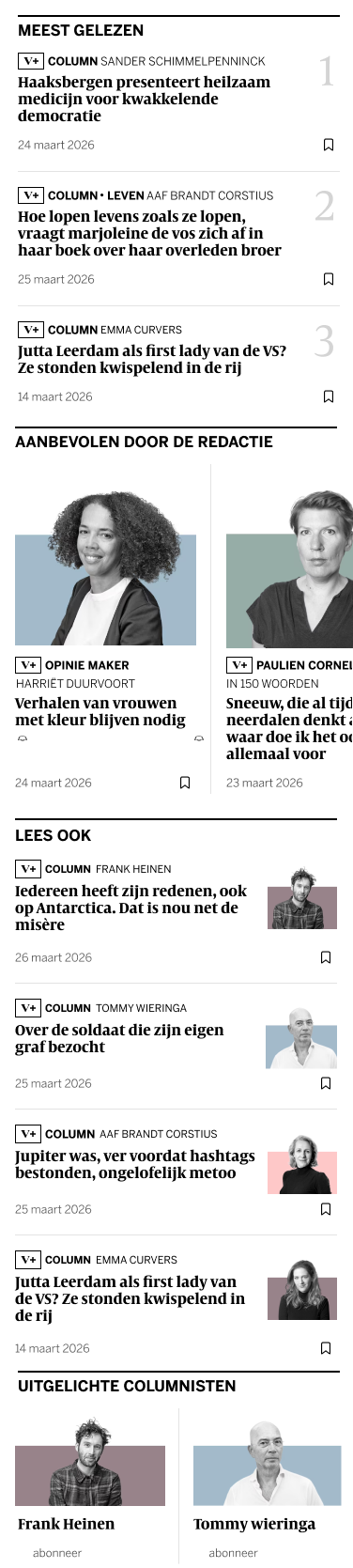
With the follow feature, users can follow their favorite columnists and stay updated on newly published columns. New articles from followed columnists appear directly in the first swimlane on the page, giving users a clear overview of what they still want to read.
To make this overview more immediate and accessible, the large featured teaser was removed from the top of the page. This allows users to enter the content overview directly when opening the page.
For users who want an overview of all columnists, a compact list of the latest columns was added, making it easier to stay up to date and avoid missing new content. This also gives users a reason to return to the page regularly.
discovery
After the quick overview section, I added a discovery section to the page. Here users can easily browse through familiar topics grouped together in a clear and structured way, such as all columns from the weekend magazine. Topics like economics were also included to offer more depth and encourage further exploration.
All articles are displayed in swimlanes, helping the page stay compact while allowing users to quickly scan and navigate through the content.


Reflection
During this project, I learned more about designing within a large design system and how important consistency is when working on products used by a wide range of users. Working within existing guidelines challenged me to think carefully about usability, structure, and visual hierarchy while still leaving room for improvements and new ideas.
I also gained experience collaborating with different teams, including editorial teams, Product Owners, and other stakeholders. Through these conversations, I learned how valuable it is to involve multiple perspectives throughout the design process and how different teams can have different needs and priorities.
Another important lesson from this project was the value of iteration. By testing ideas, gathering feedback, and continuously improving the design, I saw how small changes could make a big difference in the overall user experience.