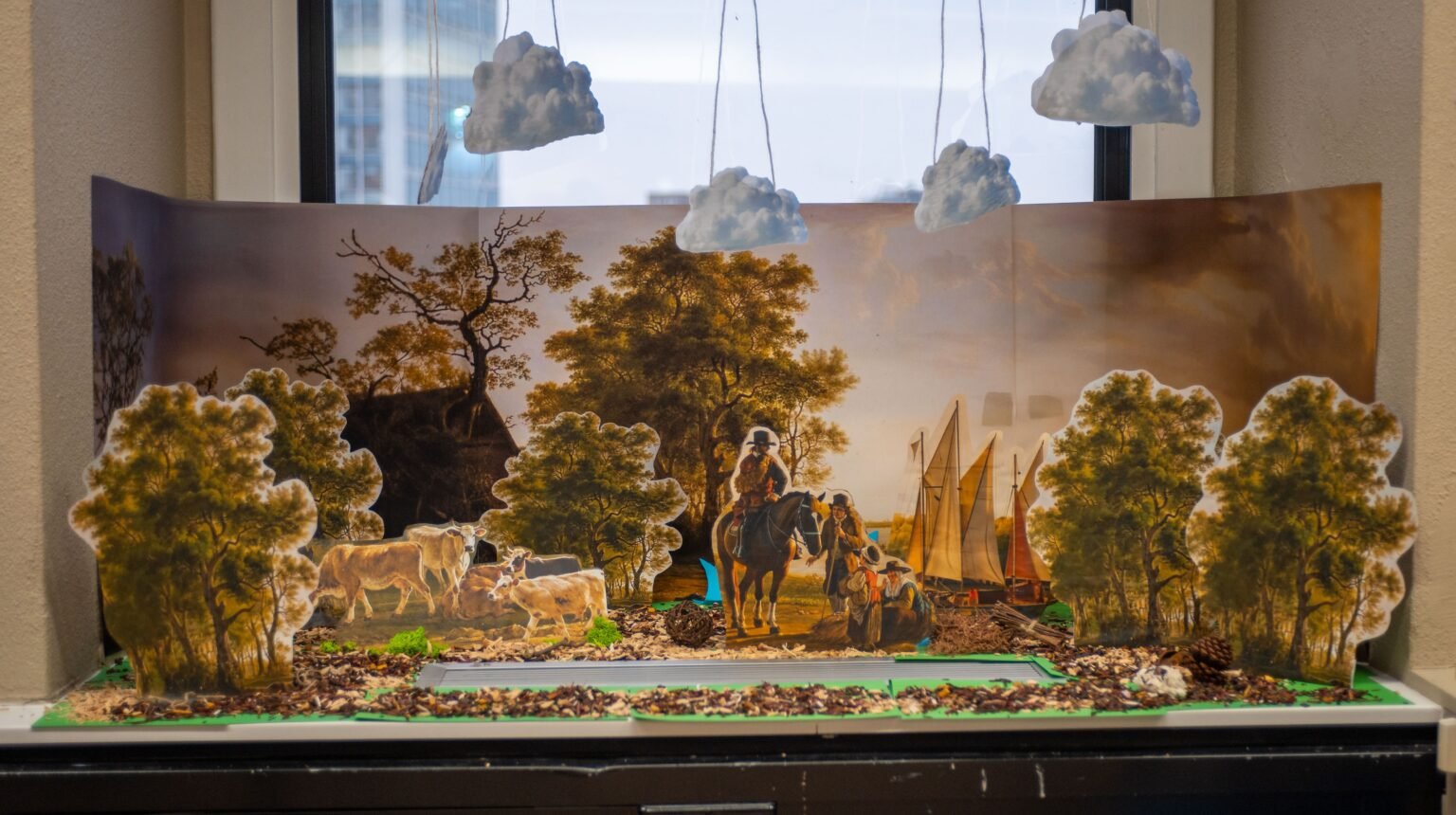
How can we offer elderly people with dementia a museum experience so that they can enjoy art and culture in a safe and meaningful way?
From the Dordrecht Museum, a museum that focuses on art from the area around Dordrecht, we received the assignment to make the public guidance in the permanent collection display of the Dordrecht Museum sufficient for a specific target group.
Date: 1-9-2024 t/m 21-1-2025
Client: het Dordrechts Museum
Grade: 8

My rol in this project
During this project, I maintained close contact with the target audience as a UX researcher. I also facilitated creative sessions and tested the final prototype with the target audience.
Target group
Elderly people between the ages of 65 and 75 who are in the early stages of Alzheimer’s.
We were given the opportunity to select a target group ourselves. In doing so, I wanted to challenge myself by choosing a group outside my comfort zone.
In the Netherlands, there are an estimated half a million people living with dementia. For elderly people with dementia and their carers, it can be difficult to engage in activities, which often leads to feelings of loneliness. That is why our team chose this target group.
At the moment, the museum offers a “Verwonder Tour” in which older visitors discuss paintings around a specific theme. However, this program has not been very successful, as it is often difficult to find a topic and conversation style that keeps the group of older participants engaged.
Research
Because it can sometimes be difficult to have a deep conversation with this target group, I chose to conduct a participatory observation. I did this during an activity at a care home (flower arranging). During this activity, I had coffee with the residents and helped with the flower arranging. I had many conversations about what their lives used to look like and what they mainly do now. The main insight I gained from this observation is that residents derive a lot of energy and confidence from topics or elements they recognize from their past.
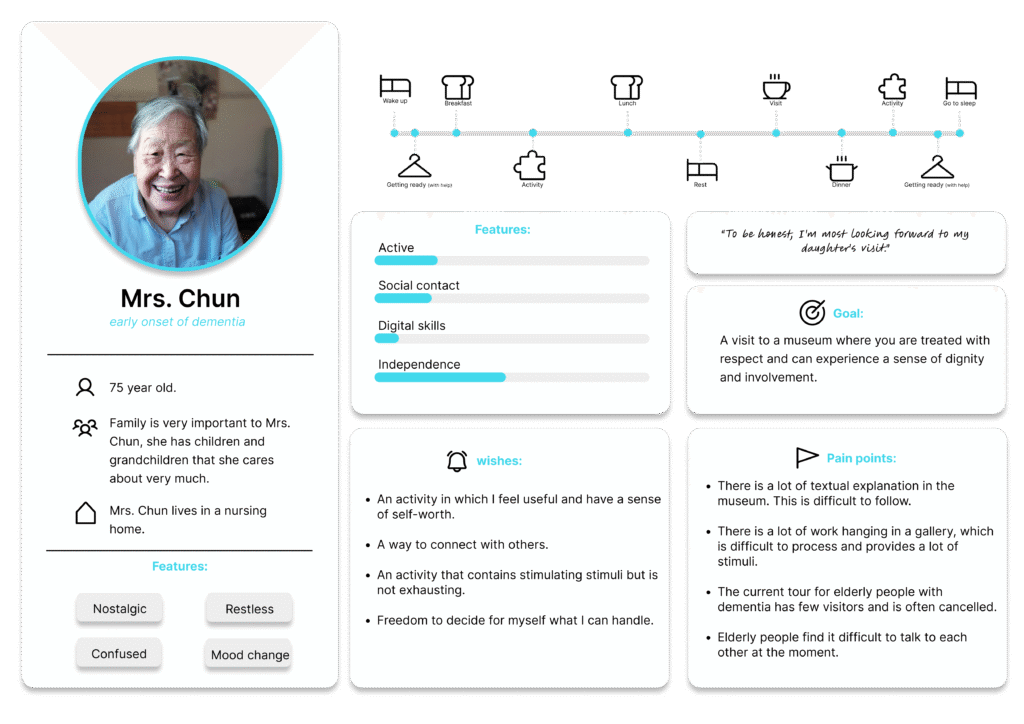
My insights from this observation, together with findings from desk research and interviews with care staff, were brought together into a comprehensive overview. By combining these different research methods, I was able to identify patterns, needs, and key themes within the target group.
I then translated these insights into a clear and engaging user persona, which visually represents the characteristics, motivations, and challenges of the users. This persona served as a foundation for making informed design decisions throughout the project.
Ideation
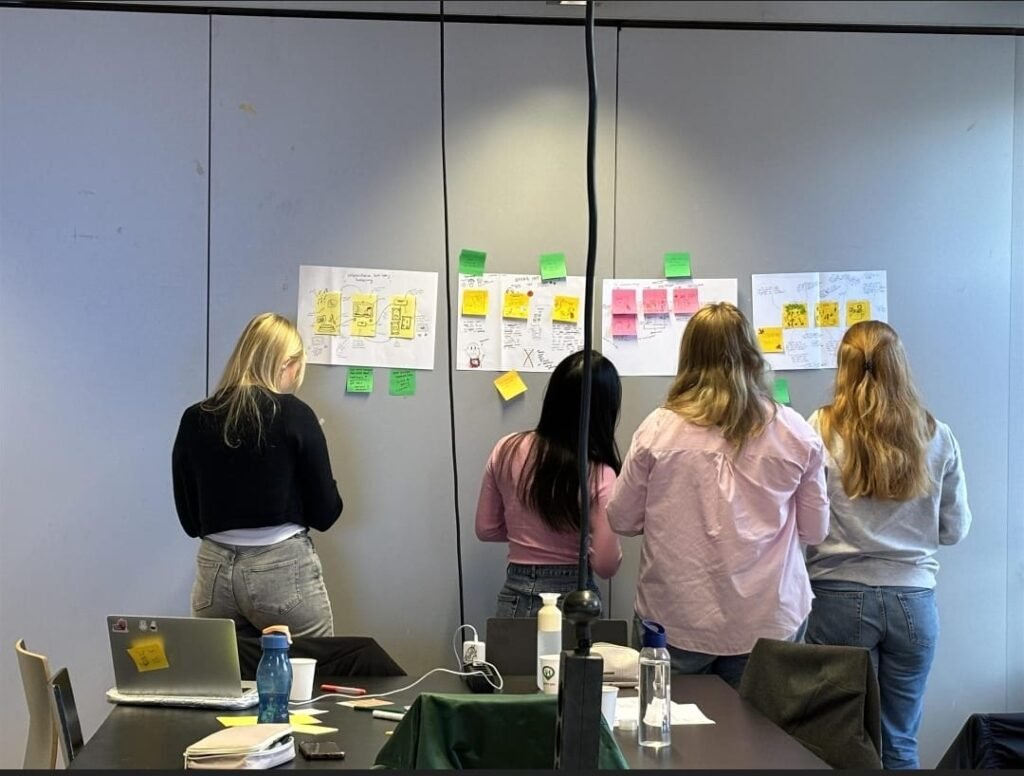
After completing the research phase, I organized and facilitated a series of creative sessions. During these sessions, I applied a variety of ideation methods, such as lightning demos, Crazy 8’s, and 20-minute brainstorming, to encourage divergent thinking and generate a broad range of ideas. These methods helped the team to quickly explore different directions and build on each other’s input in a structured yet creative way.
Following the ideation phase, we refined the most promising ideas and developed the concept of bringing paintings to life. The goal of this concept was to create a more engaging and meaningful experience by connecting visual art to movement and storytelling.
For the prototype, my teammates created a video based on a painting, in which selected elements and fragments of the artwork were animated and brought to life. This allowed us to demonstrate how the concept could enhance user engagement and make the experience more immersive.
Testing with the target group
During this project, I had the opportunity to test our prototypes several times. For example, I visited a care farm and a nursing home to connect with elderly residents and their caregivers. I took the time to get to know the people, drinking coffee with them and participating in various activities.
During the testing sessions, I briefly explained my purpose and what we were going to do. Then, I showed the video. Afterward, I engaged the residents in conversation about what they had seen. It was important to me to make them feel comfortable and give them space to share their thoughts and stories.
Through these tests, I discovered that highlighting certain elements helped the elderly focus more easily. The parts they felt a personal connection with stood out to them, creating a more meaningful experience. For instance, I spoke with a woman who used to visit the harbor with her father, as reaction of the ship she saw in the video.
One area for improvement is the pacing. The animations could be shown for a bit longer, and a pause between paintings would allow space for conversation.
here you can find the video i used during testing.
Reflection
During this period, I learned how to work with a challenging target group. For example, I often couldn’t directly ask the elderly how they felt about certain things, so I learned to pay more attention to their behavior. Personally, I really enjoyed the challenge of getting to know these people and being able to mean something to them. I discovered that, for many of them, simply having a conversation and sharing a cup of coffee was already enough.
It is also difficult for people with dementia to take in too much information at once. That is why I believe this approach of highlighting just one small element works so well. One thing I would like to change is removing the guided tour from the museum. While talking to visitors and caregivers, I realized that they neither had the resources or the interest to visit the museum.